


You Are Not Your Sun Sign: What a Birth Chart Contains
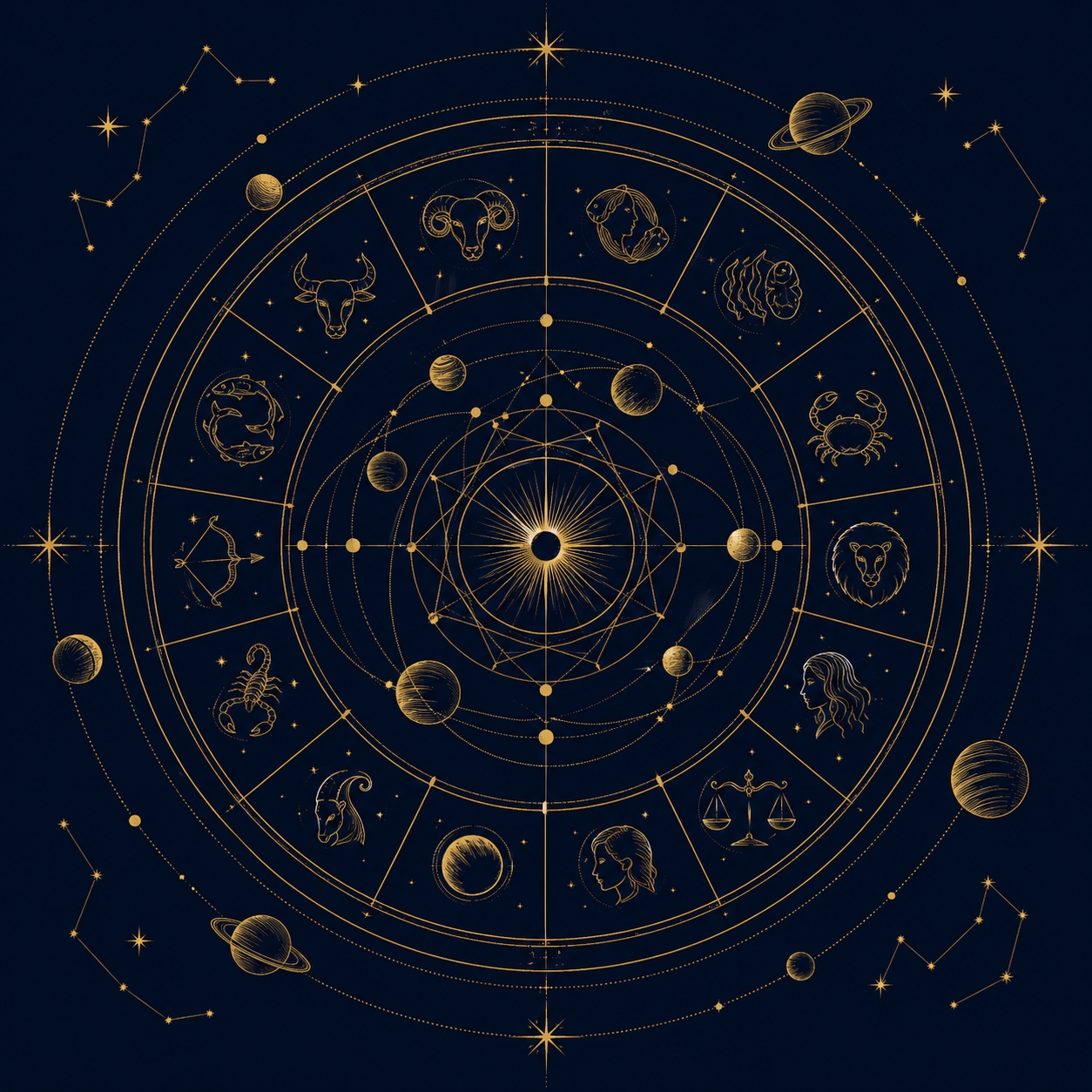
The newspaper horoscope is a 1930 invention; the birth chart is two thousand years older. Sun, Moon, Ascendant, houses, aspects — how astrologers actually read.
Here is a fact that changes how the whole subject looks: the newspaper horoscope — twelve paragraphs, one per sign, your week in forty words — was invented in August 1930, when a London paper commissioned an astrologer to mark Princess Margaret's birth and the feature proved too popular to stop. The birth chart it abbreviates is more than two thousand years older. Judging astrology by the sun-sign column is judging music by a ringtone.
A sky, not a box
A natal chart is a diagram of the entire sky at the minute and place you were born — every planet, its sign, its house, and the angles between them. The tradition that built this instrument, from Hellenistic Alexandria through the Arabic astronomer-astrologers to Renaissance Europe (Britannica's history traces the line), never described people by one placement. It read an ecosystem. Your sun sign is one organ of that body — a central one, but no more the whole of you than a heart is a person.
The trinity practitioners start with
Ask a working astrologer where they look first and you will hear three placements, not one. The Sun: the direction of becoming, what your life is trying to be about. The Moon: the needs of the animal — what comforts, what unsettles, how you digest a day (a rhythm we follow in Living by the Moon). The Ascendant: the sign rising on the eastern horizon at your birth minute — the door through which everything in the chart enters a room. Two people with the same sun sign and different moons are different weather systems that happen to share a season. This is why sun-sign columns feel alternately eerie and absurd: they are addressing one organ of twelve million bodies.
Deeper craft: houses, aspects, sect
Beneath the trinity, the working parts. Houses place the planets in the rooms of a life — the same Venus behaves differently in the house of work and the house of the hidden. Aspects are the conversations between planets: a trine flows, a square argues productively, an opposition demands a negotiated settlement. And the old Hellenistic craft added a distinction most moderns forgot and good traditionalists have revived: sect — a chart born by day and a chart born by night weigh the same planets differently, the way the same words carry differently at noon and at midnight. None of this is fatalism. The chart's own practitioners, from Ptolemy forward, repeated the maxim that the stars incline and do not compel; the instrument describes weather, and you remain the sailor. We make the same case for Mercury's little season in Mercury Is Not Your Enemy.
Why the flattening matters
The sun-sign shorthand is not just imprecise; it costs people the actual gift of the practice. Someone who has read only their column knows a cartoon of themselves — often one they have argued with their whole life, because their moon or rising carries the temperament their sun contradicts. The most common thing a person says on first seeing their full chart read well is some version of: so I'm not broken — I'm just not only that. A crowded sky is roomier than a box. It also ends the party trick of dismissing people by month: nobody who has seen houses and aspects at work can go on believing a twelfth of humanity shares one personality — and the same complexity is exactly why two charts together need a verb, not a verdict, as we argue in Compatibility Is a Verb.
How to meet your own chart
You need three facts: date, place, and — this one matters most and is most often missing — the birth time, as close to the minute as family memory or a certificate allows, because the Ascendant and the houses turn on it completely; a chart without a time is a story without a narrator. Then resist the urge to read it as a list of verdicts. Read it as terrain: here the rivers run easily, here the mountains want switchbacks, here two weathers meet and make storms worth respecting. The old astrologers kept charts for decades and reread them at every threshold — not to be told their future, but to be reminded of their terrain. That is the instrument's real use, and no forty-word column has room for it.
The library teaches the craft. A reading applies it to you.
Get your personal reading